

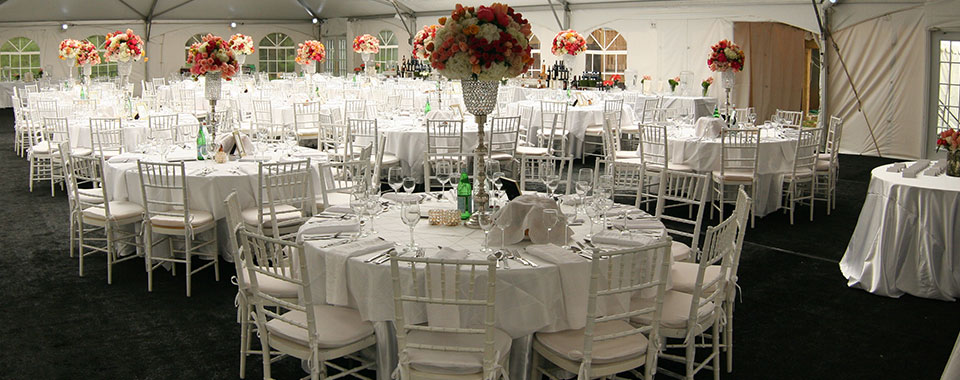
When planning an event, there are numerous factors to consider. Aside from the money, food, activities, and decorations, you also need to organize the seating and tables.
Proper spacing and arrangement allow people to move freely, converse comfortably, and have unobstructed views of crucial places such as stages or speakers.
The appropriate setup also improves the event’s tone, whether formal, casual, or collaborative, resulting in a friendly and orderly environment that serves the event’s objective.
Are you wondering how you can set up the tables and chairs for your event? Here is how to go about it, as given by event rentals experts:
Know the number of tables and chairs you need
Everything begins here. There is no way you can properly set up your tables and chairs if you don’t know the number of tables and chairs that you need.
First, have a solid headcount for your event. It is also a good idea to know the room’s maximum occupancy so that you do not exceed it.
Once you’ve determined how many people to expect, you’ll need to choose the best types of tables to accommodate your visitors. There are numerous models to pick from, but plastic folding tables are popular due to their portability, low cost, and ease of storage.
The form and dimensions of the table define the seating capacity per table. Banquet tables can seat from two to ten people.
Once you’ve decided on a type of table, you can now determine how many tables you’ll need. Simply divide the total number of visitors by each table’s seating capacity.
For example, if you have 100 visitors and have chosen tables that seat six people apiece, divide 100 by six to get a total of 17 tables (16.7 rounded up).
Remember that it is usually preferable to round up and have empty chairs than to risk a lack of seats.
Have enough space between tables and chairs.
Once you’ve bought the tables and chairs, you’ll need to arrange them in your event space. Here are tips to follow when placing your seating and tables:
The minimum distance between tables is 52 inches for rectangular or square tables and 60 inches for round tables.
When arranging the chairs, leave 18 inches between the table and the back of each chair, 16 inches for rectangular or square tables (52 inches total), and 24 inches for round tables (60 inches total).
Leave 30 inches between the back of a chair and the wall.
It’s also vital to consider the distance between chairs at the same table; aim to leave 16 inches of elbow room.
Think about the best layouts for the space.
Beyond the minimal spacing requirements, you should choose a standard layout for your tables to ensure that everything appears uniform and that you are making the best use of the available space.
Here are some common layouts that work well with each table form.
Rectangular tables naturally accommodate rows. If your space is longer than it is broad, arrange the tables in horizontal rows to optimize the extra length. Vertical rows are appropriate for wider spaces.
For square tables, a simple row plan works well, but you can also slant them to create a diamond form. This allows you to change the spacing between each table’s corners to 24 inches.
You can set up round tables in rows, but remember you need an additional room (60 inches between tables). When utilizing round tables, change the start of each row to create diagonal rows.
Think about safety and accessibility.
A successful event should be safe and accessible to all guests. Ensure that all aisles, exits, and paths are clear and wide enough to allow for easy travel and emergency evacuation if necessary.
Avoid cramming tables and chairs, and ensure that seating does not obstruct fire exits or access to emergency equipment.
Accessibility is equally vital. Allow enough space for guests who use wheelchairs or mobility aids, and make sure there are specific seating places that follow ADA rules.
When necessary, use ramps instead of steps, and keep impediments out of high-traffic areas. Also, keep electrical cables taped down or covered to avoid tripping hazards.
Set up for efficiency.
Setting up tables and chairs for an event may be time-consuming, especially if you have a vast area or a tight timeline. Thankfully, these suggestions can help speed the process and reduce stress:
Design the layout ahead of time: Draw up a thorough floor design before moving any tables or chairs. Whether hand-drawn or done with digital layout tools, determining exactly where each item should go eliminates guessing and ensures uniformity.
Ensure that you include exits, aisles, and high-traffic zones.
Mark the floor: Use painter’s tape or chalk to mark the locations of tables and other important furniture elements on the floor. This lets your setup staff work fast without continually referring to a diagram, and it ensures that spacing is consistent throughout the room.
Work in zones: Divide the area into pieces and assign team members to each one. Setting up one area at a time keeps things structured and avoids overcrowding or duplicating efforts. It’s also easier to identify and correct layout faults when you’re not handling the entire space at once.
Use the correct equipment: Carts, dollies, and table caddies make moving furniture faster and easier, especially if it’s coming from a storage area or a loading dock. Stackable or foldable tables and chairs can save time during set-up and tear-down.
Set tables before arranging seats. Begin with table placement; once the tables are in place, it is much easier to space and arrange the seats equally around them.
Align and check as you go: As you set up tables and chairs, take a step back to ensure proper alignment and spacing. A few minor changes early on can help prevent larger layout issues later on. Keep rows straight with a measuring tape or constant visual cues.
Allow extra time for adjustments: Even with the best planning, last-minute modifications are common. Work with the event party rentals Rockland and include buffer time in your setup timeline to manage unanticipated changes without stress.